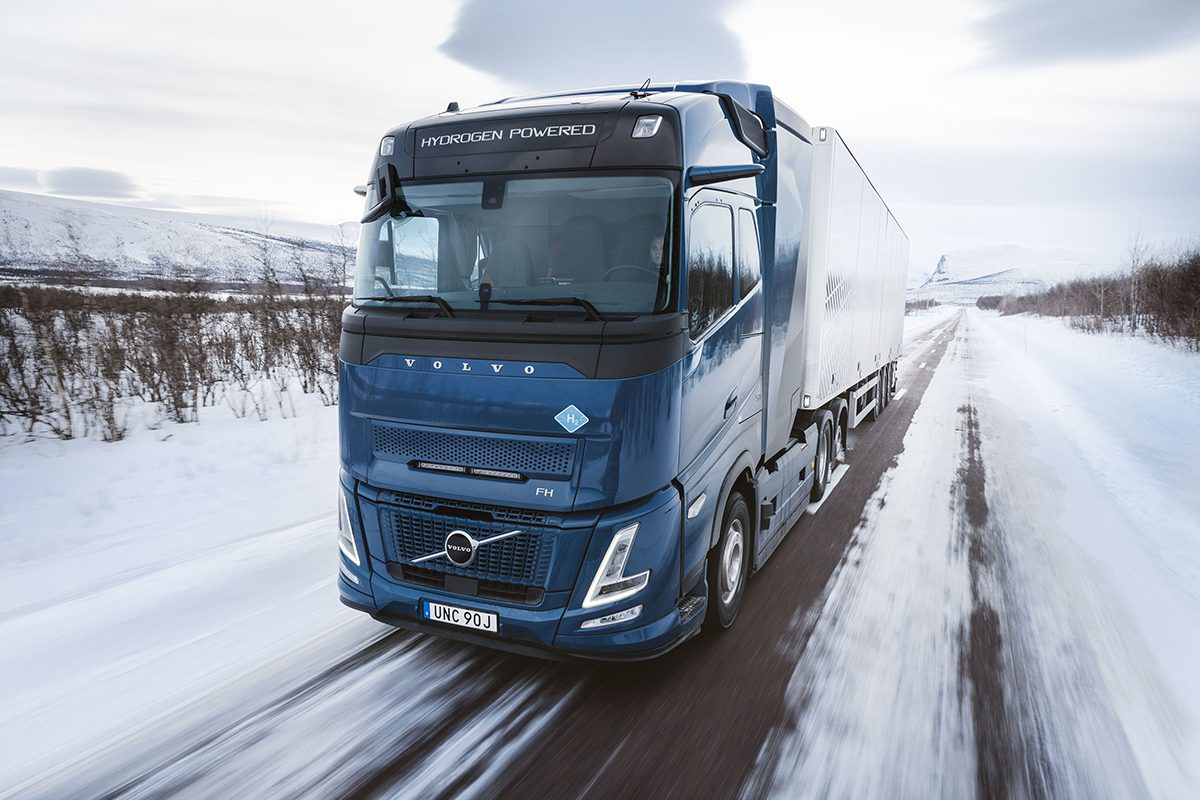
Volvo has started on-road testing of heavy-duty trucks powered by hydrogen combustion engines, marking a new phase in the company’s effort to expand low- and zero-emission solutions for commercial transport.
The trucks are being developed to deliver higher energy efficiency, lower fuel consumption and increased engine power compared to conventional hydrogen combustion technologies. Central to this approach is High Pressure Direct Injection (HPDI), which uses a small amount of ignition fuel injected at high pressure to enable compression ignition before hydrogen is introduced. Volvo has already deployed this technology in more than 10,000 gas-powered trucks globally.
According to the company, the hydrogen-powered trucks are designed to offer diesel-like performance, including power, torque and drivability, while enabling operation similar to conventional diesel vehicles. Volvo expects these trucks to be particularly suited for longer-distance operations and in regions where charging infrastructure or dwell time constraints limit the practicality of battery-electric solutions.
The trucks also have the potential to deliver net-zero CO2 emissions on a well-to-wheel basis when powered by green hydrogen and renewable HVO as the ignition fuel. Their deployment, however, will depend on regional regulatory classifications, the availability of hydrogen fueling infrastructure and the competitiveness of hydrogen pricing.
Volvo is positioning hydrogen combustion engines as one component of a broader three-path strategy that includes battery-electric trucks, fuel cell electric trucks and combustion engines running on renewable fuels such as biogas and HVO. This approach is intended to give fleets flexibility to match technology choices with operational requirements, infrastructure availability and energy costs.
The company plans to introduce its hydrogen combustion trucks commercially in Europe before 2030, with global applicability dependent on market conditions and policy frameworks.