When MidSouth Aggregate needed to replace an aging service truck for their quarry operations, Dale Long faced a challenge familiar to fleet managers across the mining and construction sectors: how do you power mobile equipment in remote, demanding environments without burning through fuel budgets and accelerating maintenance costs?
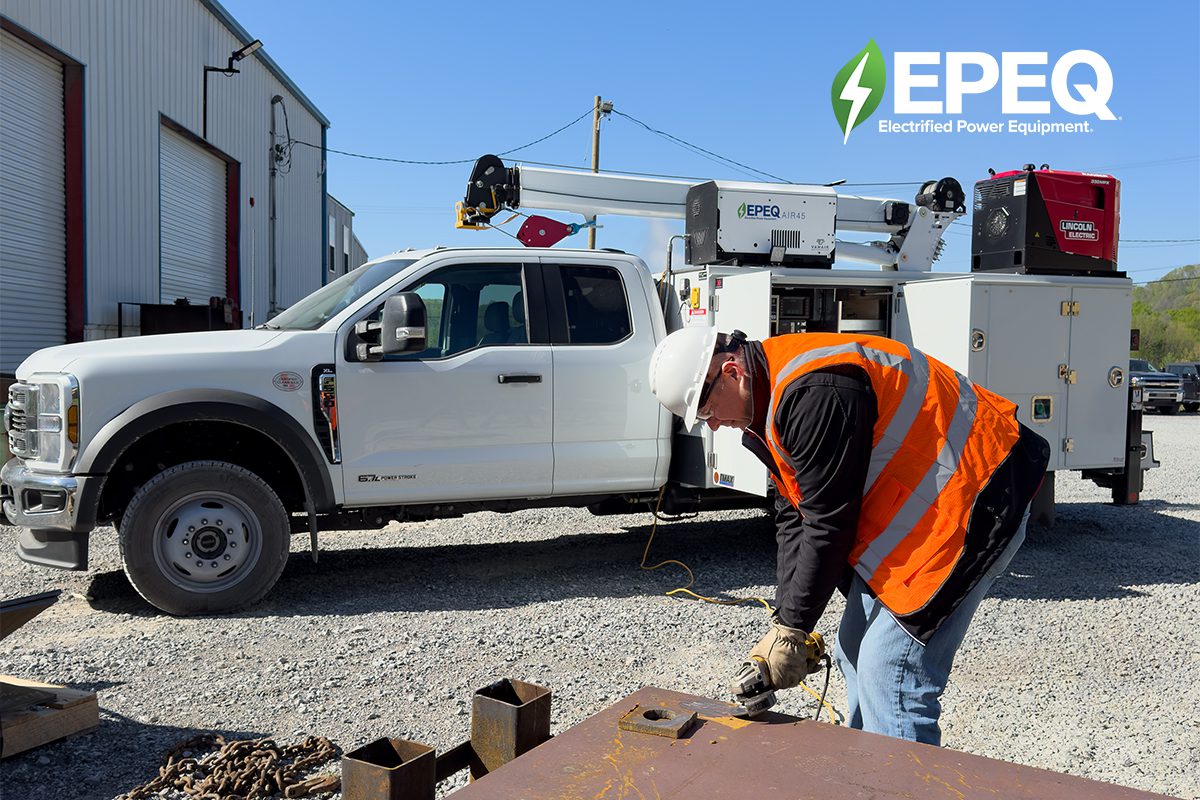
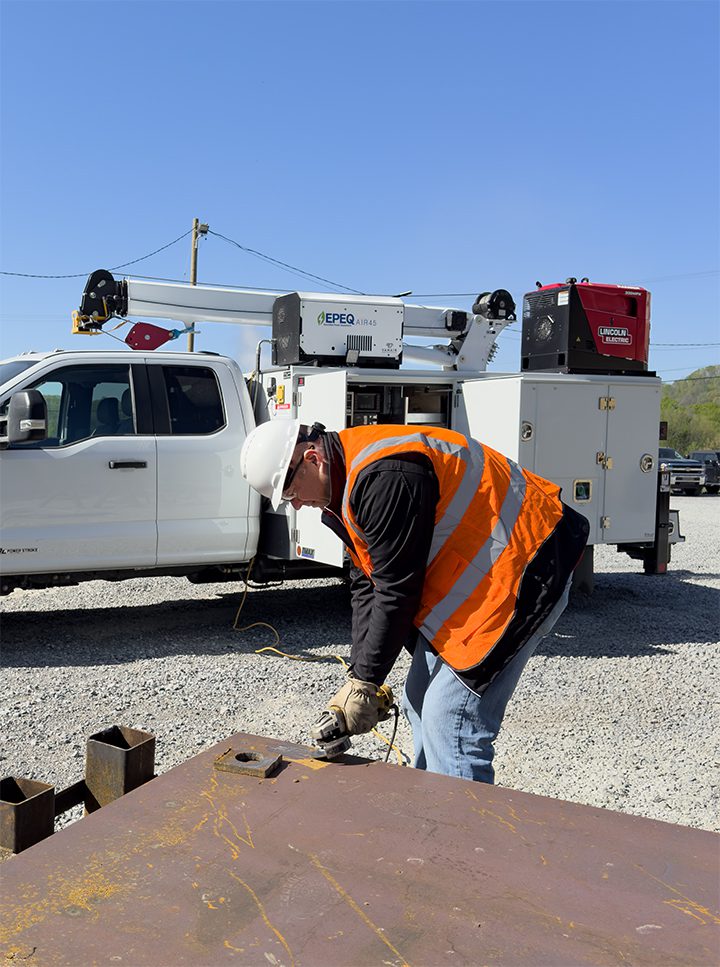
Long’s solution offers a roadmap for operations wrestling with what the industry calls “hard-to-electrify” applications. Rather than accepting the traditional trade-off between capability and efficiency, MidSouth Aggregate built a Ford F-550 service truck around Vanair®, a Lincoln Electric Company’s EPEQ® Electrified Power Equipment® that delivers full functionality while cutting fuel consumption.
The results from 18 months of operation validate an approach that addresses one of clean transportation’s persistent obstacles: proving that battery-powered equipment can handle punishing real-world conditions without compromising performance or creating new operational headaches.
The Hard-to-Electrify Challenge
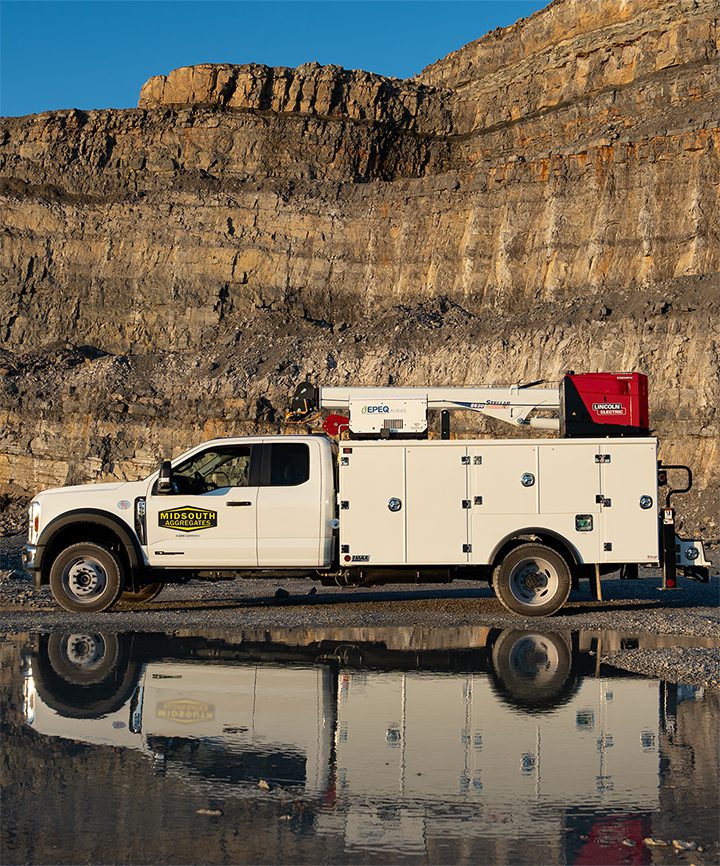
Mining and quarry operations present unique obstacles for electrification. Service trucks work in dusty conditions, navigate rough terrain and often spend hours at remote job sites where traditional solutions meant letting engines idle continuously to power equipment. The conventional setup burns 10 to 15 gallons of diesel during a typical eight-hour service call, with most fuel consumed simply to keep the engine running.
Beyond fuel costs, constant idling creates cascading expenses. Oil change intervals increase, engine mounts wear faster, exhaust components need frequent replacement and overall equipment lifecycles compress. The noise factor compounds operational challenges, making communication difficult and increasing technician fatigue during long service calls.
For fleet managers evaluating electrification, these applications represent a critical test. If battery-powered systems can deliver reliable performance in mining environments, they can work almost anywhere.
A Hybrid Approach to Mobile Power
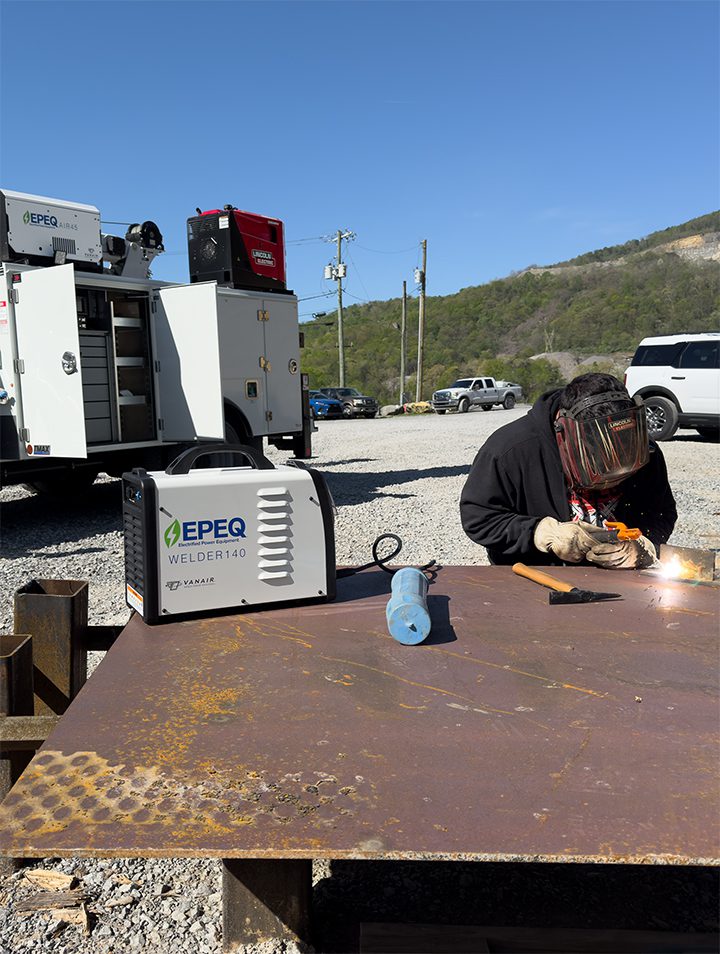
MidSouth Aggregate’s solution centers on intelligent power management rather than wholesale replacement of proven systems. The truck uses three main EPEQ® components that work together to minimize engine runtime while maintaining full capability.
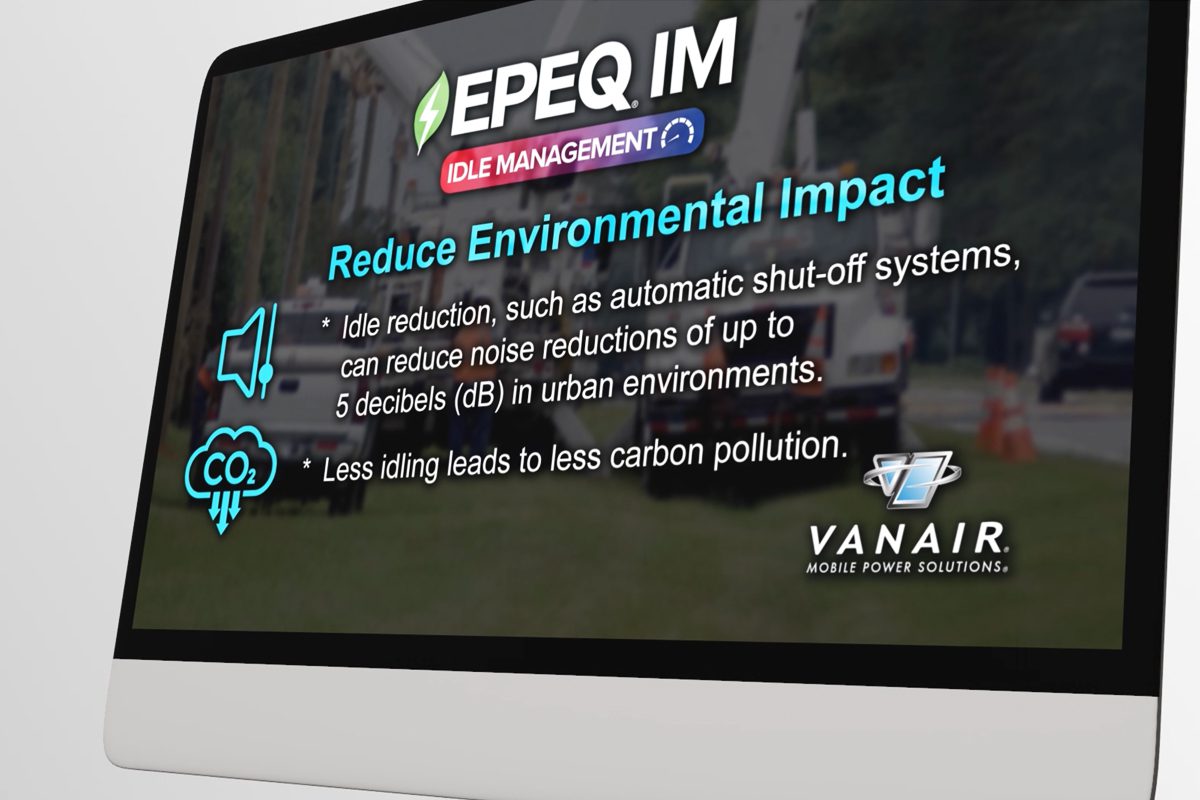
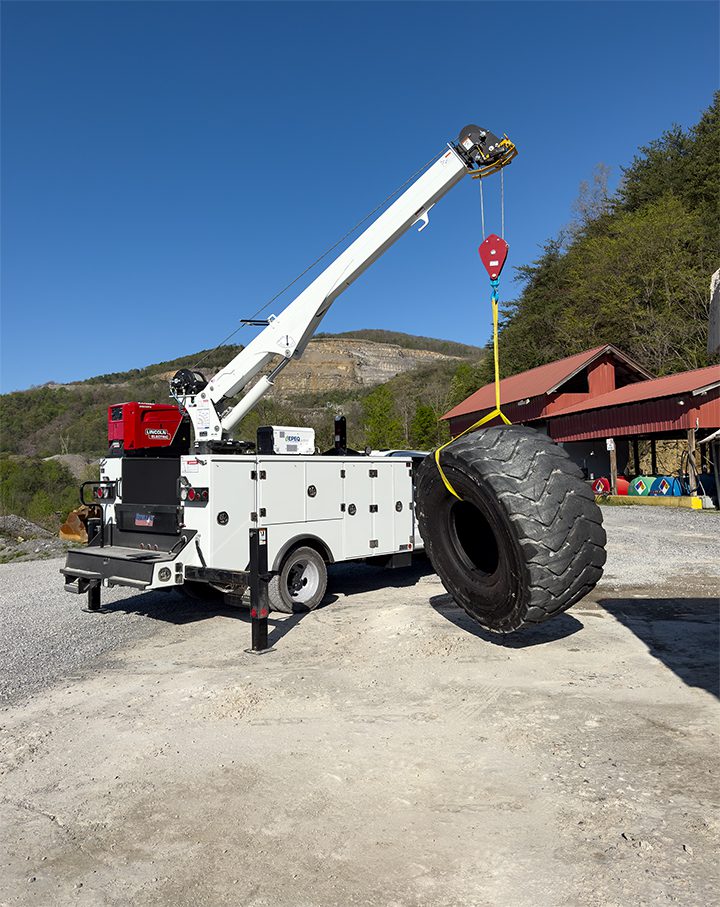
The EPEQ® AIR45 compressor system handles pneumatic tool requirements and tire service, operating on battery power instead of requiring the engine to run. An EPEQ® EPTO system powers a crane for lifting heavy components like cylinder heads, transmission assemblies and conveyor sections, all without mechanical PTO engagement. Vanair’s EPEQ® Idle Management (EPEQ® IM) technology determines when to run the engine for recharging versus when to draw from stored battery power.
What makes this effective is the system’s modularity. It doesn’t force operations into an all-or-nothing choice between traditional and electrified power. Instead, it uses battery power when possible and brings the engine online only when necessary, delivering immediate benefits without requiring wholesale changes to how technicians work.
Measurable Performance Gains
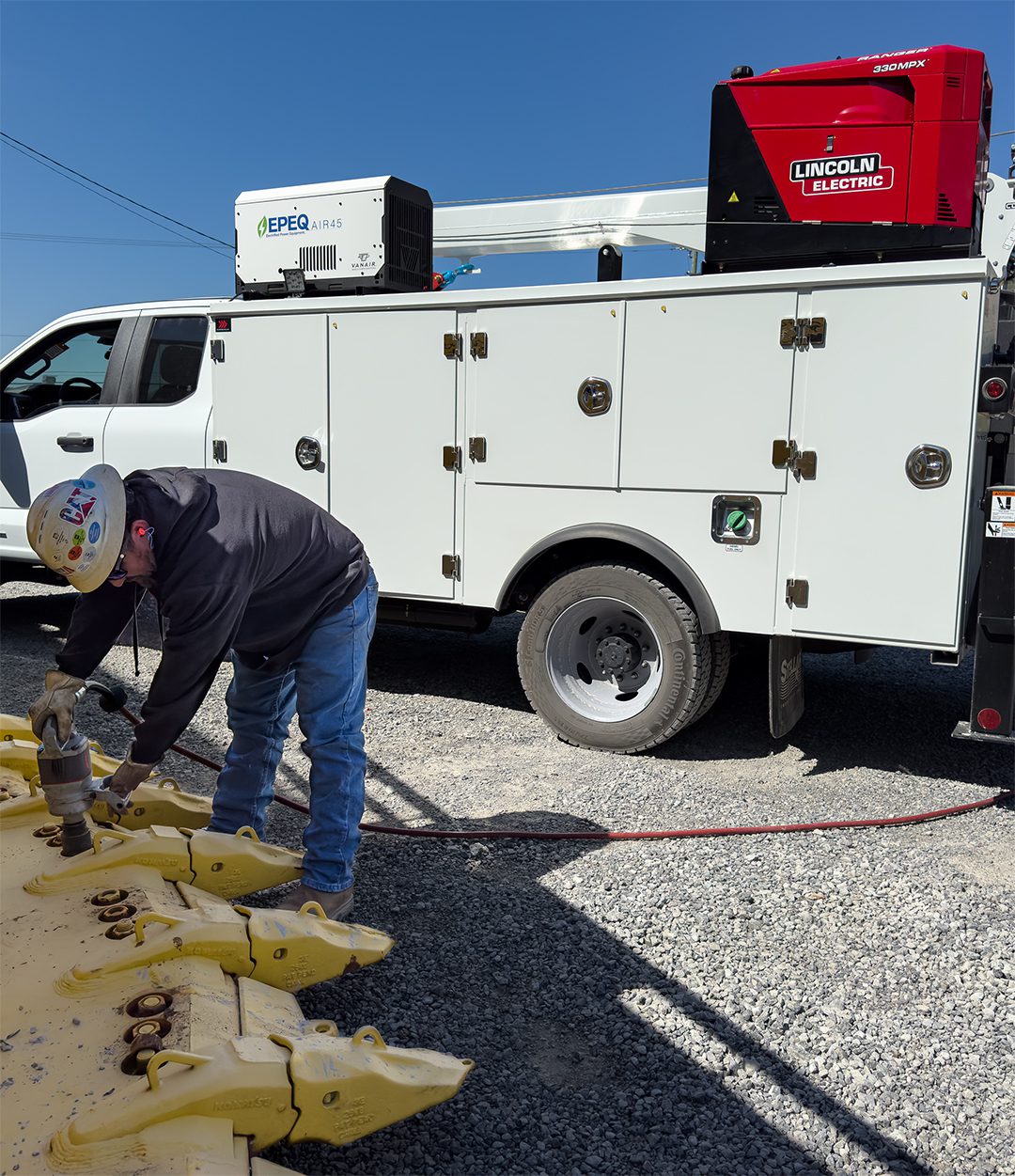
The operational data tells a compelling story. Fuel consumption dropped from 10 to 15 gallons per service call to 2 to 3 gallons, translating to thousands of dollars in annual savings on a single truck. For fleets managing multiple service vehicles, those numbers scale rapidly.
Maintenance costs decreased because the engine runs significantly less. The EPEQ® components themselves have required minimal maintenance beyond routine inspections.
MidSouth Aggregate reports zero downtime related to the electrified systems over 18 months. In mining, where equipment availability directly impacts productivity, that reliability record matters. Technicians who initially questioned whether battery-powered equipment could deliver sufficient power in demanding applications now prefer the electrified setup to traditional systems.
The EPTO system for crane operation has proven particularly effective. Technicians report smoother operation and better control compared to mechanical PTO systems. The absence of engine noise and vibration during crane operation makes positioning heavy components easier and safer.
Addressing Range Anxiety
One persistent barrier to electrification adoption is range anxiety – the concern that battery systems won’t provide sufficient power for full work cycles. MidSouth Aggregate’s experience demonstrates how intelligent power management solves this problem in practice.
The EPEQ® IM system monitors battery state, power demand, and equipment requirements in real time. It brings the engine online for recharging before power levels become critical, ensuring technicians never face situations where equipment stops working mid-job. This intelligent management eliminates the guesswork that makes fleet managers hesitant about battery systems.
For operations considering electrification, this represents a crucial insight. The technology isn’t asking fleets to accept reduced capability or operational constraints. Instead, it’s delivering the same or better performance while dramatically reducing fuel consumption and emissions.
Implementation Considerations
MidSouth Aggregate’s experience offers practical guidance for operations considering similar approaches. Working with a truck and vehicle service provider and a local upfitter, who had experience with electrified systems, proved valuable in optimizing battery placement, wiring, and component accessibility. Operations attempting similar upfits should seek body builders familiar with electrified systems rather than trying to retrofit existing trucks without proper planning.
The other learning involved change management. Experienced technicians accustomed to hearing an engine run during service calls initially worried that quiet operation meant insufficient power. Hands-on training and letting performance speak for itself addressed these concerns. The lesson: plan for the human side of technology transitions, not just equipment installation.
The Business Case
For fleet managers evaluating electrification, the total cost picture matters more than upfront investment. Yes, electrified systems carry initial costs. But fuel savings, reduced maintenance, improved equipment longevity, and operational flexibility create payback periods shorter than many operations expect.
Long reports faster-than-projected ROI at MidSouth Aggregate and is already planning to spec the next service truck with EPEQ® components. For mining operations managing fuel costs, maintenance budgets, and increasingly stringent environmental regulations, that endorsement carries weight.
The quieter operation creates additional value. Reduced noise opens up work possibilities in areas where traditionally loud, diesel-burning equipment creates restrictions. As mining operations expand closer to developed areas, this advantage becomes more valuable.
Proving the Concept
The mining and construction sectors haven’t rushed to adopt electrification, and for good reason. Operations need equipment that works reliably in punishing conditions. MidSouth Aggregate’s 18-month performance record demonstrates that thoughtfully designed electrified systems can handle demanding applications while delivering measurable operational benefits.
For fleets watching fuel costs, managing maintenance budgets, and dealing with evolving environmental requirements, this represents more than a feel-good sustainability story. It’s a proven approach to reducing operating costs while maintaining full capability in applications previously considered too difficult to electrify.
The technology is ready. The business case is clear. The question for fleet managers is whether they’re ready to rethink what’s possible for their hardest-to-electrify applications.